


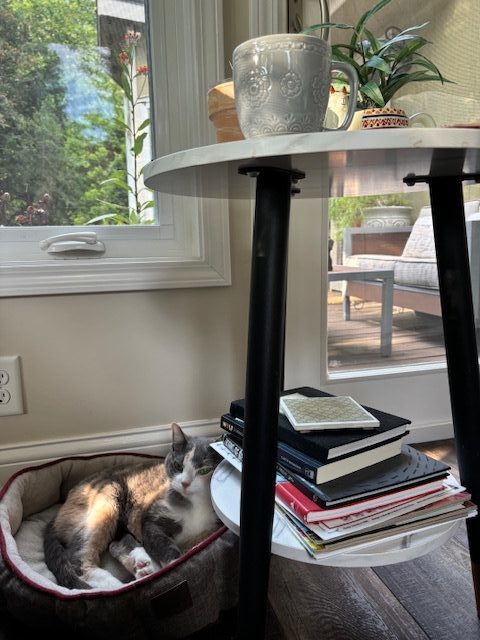
A few years ago, my family adopted a kitten from our local shelter. We didn’t know much about her background, but she came to us from a foster home that had treated her for an eye infection. I can only imagine that she had a difficult first few weeks. She was not an overly affectionate or trusting kitten, but within a few weeks of being in our home, I noticed her following me around the house more. It was like she was testing the waters of our relationship—she wanted to trust, but she wasn’t quite there. This year we adopted a senior cat from the shelter. She had been declawed, she has physical challenges, and she is also deaf. She has very little “armor” to protect or defend herself, but in contrast to the kitten, she is absolutely fearless. It is clear that someone deeply loved and cared for her, and she trusts us completely.
What was risky for the kitten is not risky for our senior cat. Everyone defines risk differently. And how we define what is risky for us usually has to do with how safe (or unsafe) we feel.
Our brains are wired to protect us. We’re constantly scanning our environment for threats, and when we perceive a threat, we protect ourselves. When we feel safe, we are more likely to lean in.
Risk is antithetical to us and our hard wiring. Risking when you don’t fully trust is hard. What if you get hurt, get laughed at, or feel exposed?
The definition of risk I’ve been playing with is “exposing yourself to discomfort (danger, harm or loss) for the purpose of progress” With this definition, it is clear that leadership requires risk.
I’ve decided the kitten started taking small, calculated risks as she followed me while maintaining her distance. She wanted a relationship, but she hadn’t decided if it was safe. This little risk led to even greater risks as she has continued over the years to stretch, test, and stretch again. To this day, she is still jumpy and certainly isn’t a snuggling lap cat, but she does have her moments early in the morning where she’ll climb into bed and want affection.
The cool thing about risk is that it’s more actionable than courage, and it can be done even when you don’t fully trust or feel safe. In fact, the irony is that risk-taking can lead to both trust and courage. So when you want a change or you want to see progress, lean into your discomfort. Even if only a tiny bit. Small risks build the courage muscle, and you will move closer to the change you desire.