


1:1 COACHING
- 1:1 conversations with a professional coach
- Listening, reflecting, sharing feedback and observations
- Online, phone, or in-person
- Standard: 45 minutes per session / Bi-weekly / 6-12 sessions / 3-6 months partnership
- English or Japanese
What I offer: experience, science & inner wisdom
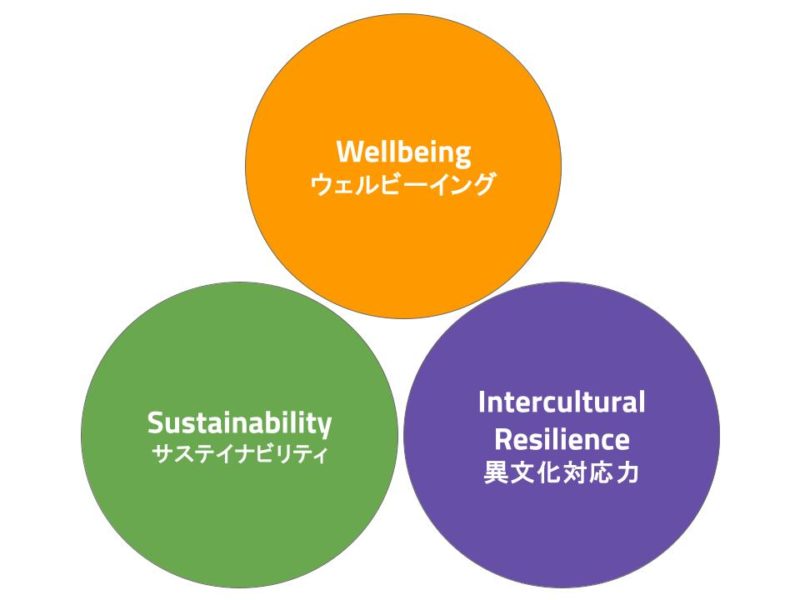
My Coaching, Mentoring and Consulting services are rooted in my professional background in social sustainability and my studies of human behaviour in Applied Cultural Analysis/ ethnology, as well as my practices of animistic- and Zen-based mindfulness. My extensive experience, studies and inner wisdom are often manifested in these areas: Well-being, Sustainability and Intercultural Resilience. To me, they are not just abstract concepts — they are lived, professional, and deeply integrated into how I work with my clients.
Besides, they help me to cover a whole person, the multiple levels of human complexity.
- Being professional and personal.
- Being a certain nationality/ethnicity and intercultural/universal
- Being affected by cultural and societal demands, as well as one’s own emotional and mental patterns, including biases, beliefs and values.
Well-being
Through living and working in both Japanese and Scandinavian societies, I’ve learned that “wellbeing” means something different depending on context — culture, society, and the individual person.
“Wellbeing,” at its core, is not limited to personal work-life balance. It encompasses physical and mental wellness, financial and social security, meaningful participation in society, work that matters, and a sense of life purpose.
And yet, ultimately, wellbeing must be defined by each of us individually. Unless we take the time to define what happiness and fulfilment mean to us, we may spend our lives chasing a version of “the good life” that was never really ours to begin with.
In my coaching, I help you articulate what happiness you truly seek — what you really want and need. From there, we translate that multidimensional sense of wellbeing into practical tools and actionable strategies: daily habits, shifted perspectives, and a life designed to feel both fulfilling and sustainable.
Reference:
- World Happiness Report
- My research in Ethnology: Where is happiness? A cultural analysis of the emotional practices
- Interculturalism (wikipedia)
Sustainability
For 15 years, I worked in the field of corporate sustainability. That work demanded a particular kind of thinking — holding the big picture, balancing the needs of the environment, society, and the economy, rather than viewing any issue through a single corporate lens.
What sustainability taught me, above all, is that things are rarely black or white, right or wrong. We don’t want to harm the planet, yet we’re reluctant to give up the comfort and convenience of modern life. I experienced my share of disappointment and frustration in that field — but I also came to deeply understand the importance of balance and acceptance.
What has become clear to me is that external sustainability is no longer separate from our inner lives. The weight of environmental disruption and social unrest is increasingly showing up as eco-anxiety — a diffuse but very real unease about the future. This is prompting many people to turn inward and explore what is now called inner sustainability.
That thread runs through my coaching. One of the questions I return to most often is simple, but quietly powerful: “Is it sustainable for you?”
Whether we’re looking at goals, habits, work structures, or relationships, this question helps my clients build lives they can not only maintain — but truly thrive in, over the long term.
Intercultural Resilience
Born and raised in Japan, I have lived in the US, France, and Sweden, and have studied and worked alongside people of many nationalities and backgrounds. Through those years of experience, I’ve totally dropped the idea of “cultural difference” as a fixed thing. What I see instead is the difference between individuals.
I don’t approach people as American or Japanese. I simply stay curious — meeting each person as someone with a unique set of perspectives, shaped by their own particular blend of influences. Through an anthropological lens — rooted in applied cultural analysis — I’m drawn to making the familiar strange, and the strange familiar.
Individuality — Culture is formed by groups, communities, and shared history — but each person carries their own distinct worldview. No two people, even from the same culture, see the world in exactly the same way.
Non-judgement — Before reaching for judgment, I invite people to pause and notice — their thoughts, their reactions, their assumptions. That noticing becomes the foundation for recognising biases and mental frameworks, and ultimately for using that awareness as a tool for growth and accountability.
Universality — In my life and work, I often ask myself: is what I’m offering true at the level of our shared humanity? Can I meet this person not as a Japanese woman, but simply as a human being? Sitting with questions like these expands our awareness and deepens our understanding of others — and of ourselves.